What Is a Soffit? Roof Soffits, Materials, Repairs and Maintenance Explained
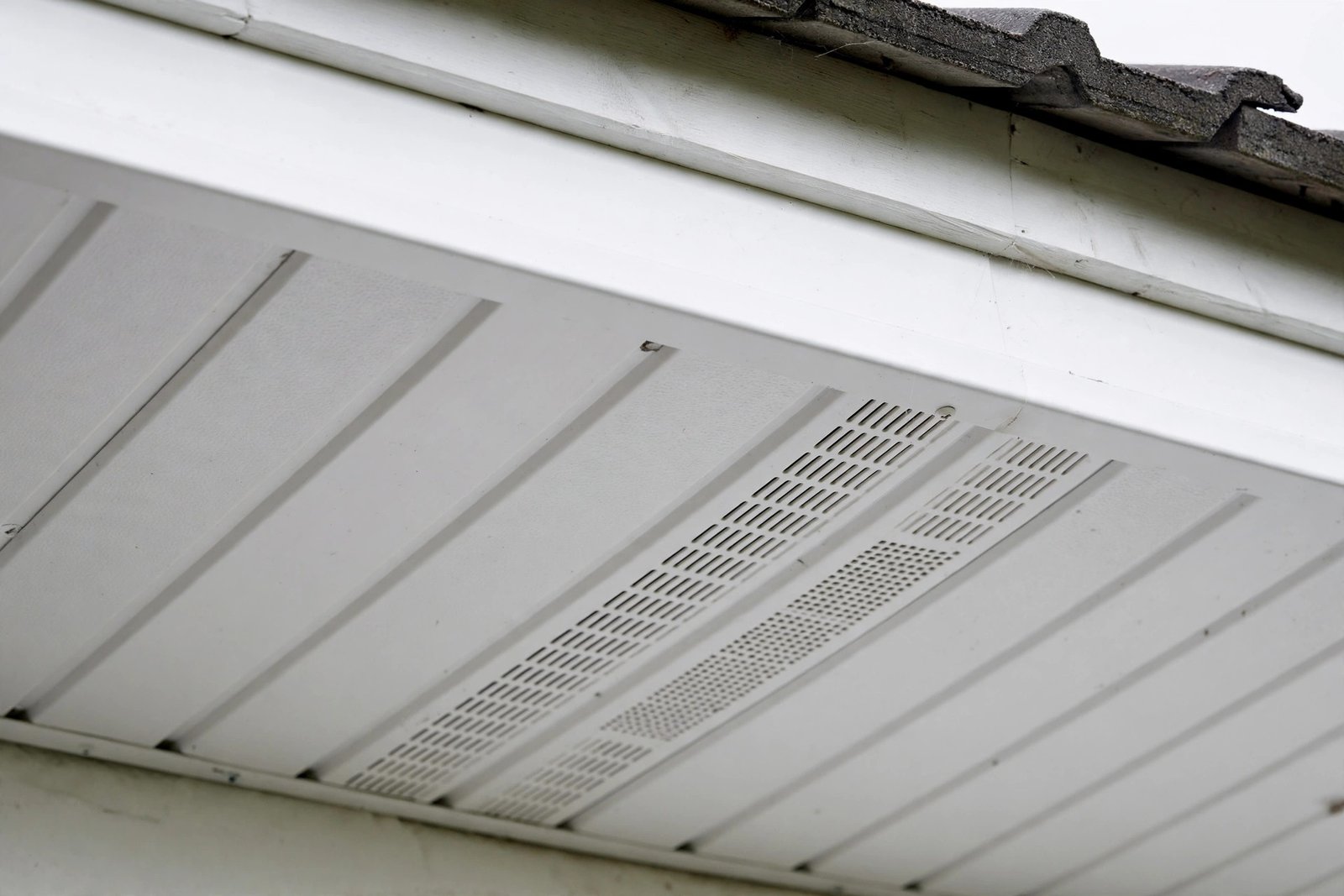
Look up at the edge of almost any pitched roof and you will see a horizontal board tucked underneath the overhang, running between the outer wall of the house and the fascia board at the edge of the roof. That board is the soffit. It is one of the least noticed parts of a home, yet it plays an important role in keeping the roof structure dry, ventilated and protected from birds and pests. Because soffits sit above eye level and are often painted the same colour as the rest of the roofline, many homeowners never give them a second thought until something goes wrong, such as a board coming loose, paint beginning to peel, or signs of damp appearing near the eaves.
Understanding what a soffit is, what it does, and how to look after it can help you spot problems early and make better decisions when repair or replacement becomes necessary. This guide explains soffits in plain language, covering their purpose, the materials they are made from, the warning signs of damage, the difference between repair and replacement, how fitting works, and how soffits relate to ventilation, fascia boards and guttering.
What Is a Soffit?
The word soffit comes from the underside of an architectural feature, and in roofing it refers specifically to the board that closes off the underside of the roof overhang. Where a roof extends beyond the walls of a house, there is a gap between the top of the wall and the underside of the roof covering. The soffit fills that gap. Without it, the ends of the rafters, the roof timbers and the inside of the roof space would be exposed to weather, wind-driven rain, insects and birds.
Soffits are part of what roofers call the roofline. The roofline is the collection of boards and trims that finish the edge of a roof, and it usually includes the fascia, the soffit, the bargeboards on gable ends, and the guttering. Each part has its own job, but they work together as a system. The fascia is the vertical board at the edge of the roof to which the guttering is usually fixed. The soffit is the horizontal board underneath, bridging the space back to the wall. Together, they give the roof a neat, finished appearance while protecting the vulnerable timbers behind them.
Soffits can be found on houses of almost every age and style, from traditional properties with timber roofline boards to modern homes fitted with low-maintenance materials. On some older properties, the soffit may be formed by the underside of the roof structure itself, with the rafters left exposed and boarded over. On most modern homes, purpose-made soffit boards are fixed in place to create a clean, enclosed finish.

What Does a Soffit Do?
A soffit does far more than make the edge of a roof look tidy. Its first job is protection. By closing off the underside of the roof overhang, a soffit shields the rafter ends and the wall plate from rain, snow and wind. Timber that is repeatedly soaked will eventually rot, and once rot takes hold in rafter ends, repairs become more extensive and more disruptive. A sound soffit helps keep that timber dry and extends the life of the roof structure.
The second job of a soffit is ventilation. Many soffit boards are ventilated, either through slots, perforations or a continuous gap, allowing air to flow into the roof space. This airflow is important because warm, moist air from inside the home can rise into the roof space and condense on cold surfaces. Without adequate ventilation, condensation can build up, leading to damp, mould and damage to insulation and timbers over time. Ventilated soffits provide a steady intake of fresh air at the eaves, which then travels through the roof space and exits higher up, helping to keep the roof dry from the inside as well as the outside.
The third job of a soffit is to keep out unwanted visitors. Birds, squirrels, wasps and other pests are quick to exploit any gap at the eaves. Once inside a roof space, they can damage insulation, create noise, leave droppings and, in some cases, cause a health concern. A well-fitted soffit, with no gaps or loose sections, is a simple but effective barrier. It also discourages insects from nesting in sheltered corners around the roof edge.
Finally, a soffit contributes to the appearance and value of a home. Peeling, stained or sagging roofline boards are immediately visible to anyone approaching a property, and they can give the impression that a house has not been well maintained. Clean, straight soffit boards, by contrast, give a crisp finish to the roofline and complement freshly painted walls, tidy guttering and well-kept windows.
Soffit Materials: uPVC, Timber and Aluminium
Soffit boards are most commonly made from uPVC, timber or aluminium, and each material has its own strengths and drawbacks. The right choice depends on the style of the property, the level of maintenance a homeowner is willing to carry out, and whether the existing roofline is being repaired in part or replaced as a whole.
uPVC soffits are the most common choice on modern homes and for replacement work. uPVC does not rot, does not need painting, and is resistant to weather and insect damage. It is available in a range of colours and finishes, including wood-effect options that mimic the look of timber without the upkeep. Ventilated uPVC soffit boards are widely available, with built-in slots that provide airflow without the need for separate vents. The main drawback is that uPVC can look less authentic on period properties, where timber may suit the character of the building better, and it can become brittle or discoloured after many years of exposure if lower-quality boards are used.
Timber soffits have been used for generations and remain a good choice for traditional and listed properties, where maintaining the original character matters. Timber can be painted to match the rest of the house, it is easy to cut and shape on site, and it suits homes where the rest of the roofline is also timber. The disadvantage is maintenance. Timber needs regular painting or treatment to protect it from moisture and rot, and it is more vulnerable to insect damage and warping than uPVC or aluminium. A timber soffit that is neglected will deteriorate far more quickly than a low-maintenance alternative.
Aluminium soffits are durable, lightweight and resistant to rust and rot. They are often used on commercial buildings and on homes where a long-lasting, low-maintenance finish is wanted. Aluminium can be powder-coated in a wide range of colours, and it holds its shape well. It tends to be less common on ordinary houses than uPVC, partly because it can be more expensive to supply and fit, and partly because it is less familiar to many homeowners. For the right property, however, it offers a robust and attractive option.
In many cases, soffits are replaced at the same time as fascia boards and guttering, because the three parts are connected and removing one often disturbs the others. This is also a sensible time to review ventilation, since replacing solid boards with ventilated ones can improve airflow into the roof space. A roofer or roofline specialist can advise on whether ventilation needs to be increased, particularly if condensation has been a problem or if insulation has recently been added.
Signs That a Soffit Needs Attention
Soffit problems often develop slowly, so regular visual checks are worthwhile. One of the clearest warning signs is visible damage to the boards themselves, such as cracking, warping, sagging or sections that have come loose. Discolouration, staining or dark patches can point to water getting in from above, perhaps from a leaking gutter, a damaged roof covering or overflowing rainwater running back under the roof edge.
Peeling paint or flaking finish on timber soffits is another sign that moisture is affecting the boards. Paint that will no longer adhere usually means the timber underneath is damp, and if the timber feels soft when pressed, rot may already be present. On uPVC soffits, staining that will not wash off, or boards that have bowed or pulled away from their fixings, can indicate age-related wear or movement in the roof structure.
Other signs are less obvious from the ground. Birds entering and leaving the eaves, droppings on walls beneath the roofline, or scratching noises from the roof space can all suggest gaps in the soffit. Inside the home, damp patches on upstairs ceilings near external walls, a musty smell in the loft, or visible condensation in the roof space may point to poor ventilation, which a soffit problem can cause or worsen. Any of these signs is worth investigating promptly, because roofline damage tends to get worse rather than better when left alone.

Repair or Replacement: Which Is Right?
Whether a damaged soffit can be repaired or needs to be replaced depends on the extent of the damage and the condition of the boards and timbers behind them. A single loose board, a small crack or a section of peeling paint can often be repaired without disturbing the rest of the roofline. The board can be refixed, filled, treated and repainted, provided the timber underneath is sound and the cause of the problem has been addressed.
Replacement becomes the better option when damage is widespread, when several boards are affected, or when rot has spread into the rafter ends or the fascia. In that case, patching individual boards may only hide a deeper problem, and new boards fitted over damaged timbers will not last. A full roofline replacement, covering soffits, fascias and often guttering as well, gives a clean start and allows ventilation to be brought up to a proper standard throughout.
It is also worth considering replacement when the existing soffits are solid boards and the roof space suffers from condensation. Swapping solid boards for ventilated soffits can be a straightforward way to improve airflow without major structural work. Similarly, if a homeowner is already planning other exterior improvements, coordinating the work can save repeated scaffolding and disruption. For example, roofline work is often scheduled alongside window replacement work, since both jobs affect the exterior finish of the property and benefit from being planned together.
A reputable roofer will inspect the roofline from a ladder or scaffold, check the condition of the boards and the timbers behind them, and explain whether repair or replacement is the honest recommendation. Be wary of anyone who recommends a full replacement without inspecting the roof space or the timbers, or who cannot explain why repair would not be sufficient. A clear, itemised explanation of the work proposed is a good sign of a trustworthy tradesperson.
How Soffit Fitting Works
Fitting new soffits is a job for a competent roofer or roofline installer, and it normally requires safe access equipment such as scaffolding or a stable tower, because the work takes place at roof height around the full perimeter of the property. Working from ladders alone is rarely sufficient for a full replacement, and safety should never be compromised for the sake of speed.
The first stage is removal of the old boards, together with the fascia and guttering if those are also being replaced. The installer then inspects the exposed rafter ends, wall plate and roof timbers, and carries out any necessary repairs to damaged wood before new boards are fitted. This inspection stage is important, because covering damaged timbers with new boards would only store up trouble for the future.
New soffit boards are then cut to size and fixed in place, running from the wall to the fascia board. Ventilated boards are positioned so that their slots or perforations allow air into the roof space, and any joints are sealed or covered with trims to prevent gaps. The fascia boards are fitted at the roof edge, and the guttering is rehung or replaced, with falls checked so that rainwater drains properly rather than pooling or overflowing back towards the soffit.
The final stages include sealing joints, fitting finishing trims at corners and gable ends, and clearing away debris. A good installer will also check that the roof space has a clear airflow path and that insulation has not been pushed into the eaves in a way that blocks ventilation. The result should be a neat, continuous roofline with no gaps, no loose boards and no visible fixings out of place.
Soffits, Fascias and Guttering: How They Work Together
It helps to think of the soffit, fascia and guttering as a single system rather than three separate parts. Rainwater runs off the roof covering and into the gutter, which is fixed to the fascia. The fascia protects the roof edge and supports the gutter, while the soffit closes the underside and provides ventilation. If any one part fails, the others are affected. A leaking gutter can soak a soffit, a rotten fascia can leave guttering unsupported, and a blocked soffit vent can reduce airflow into the roof space.
This is why gutter maintenance matters for soffit health. Gutters blocked with leaves and debris will overflow, and overflowing water often runs down the fascia and behind the soffit, causing staining and rot. Keeping gutters clear, checking that downpipes are not blocked, and making sure gutter joints are sealed will all help protect the soffit boards beneath them. Likewise, a roof covering in poor condition, with slipped tiles or damaged felt at the eaves, can allow water to reach the soffit from above.
When planning roofline work, it is sensible to have the whole system inspected at once, even if only one part appears damaged. An installer who looks at the soffit, fascia, guttering and roof covering together is more likely to find the true cause of a problem, rather than treating a symptom that will soon return.
Maintaining Your Soffits
Soffit maintenance is mostly a matter of regular inspection and simple cleaning. A visual check from ground level a couple of times a year, ideally after autumn leaf fall and after winter storms, will catch most problems early. Look for loose or sagging boards, staining, peeling paint, gaps at joints, and signs of birds or pests around the eaves. Binoculars can help with a closer look without the need to climb up.
uPVC soffits can usually be cleaned with warm water and a mild detergent, applied with a soft brush or cloth. Avoid abrasive cleaners or pressure washers used at close range, which can damage the surface or force water into joints. Timber soffits need more attention: check the paintwork regularly, touch up any bare or cracked areas promptly, and plan for repainting when the finish begins to wear, rather than waiting until the timber itself is exposed.
Keep gutters and downpipes clear, trim back overhanging branches that brush against the roofline, and make sure that loft insulation does not block the airflow at the eaves. If you notice condensation in the loft, damp patches near the eaves, or any sign of pests, arrange for a professional inspection rather than sealing gaps yourself, since sealing a ventilation route by mistake can make condensation worse.

Common Soffit Questions
Homeowners often ask whether soffits are really necessary, particularly on properties where the roof overhang is small. Even a short overhang leaves a gap that needs to be closed off, and ventilation remains important whatever the size of the roof. A property without proper soffits is more vulnerable to weather damage and pest entry, and the unfinished roof edge will look poor.
Another common question is whether soffits can be painted. Timber soffits can and should be painted as part of their maintenance. uPVC soffits are normally supplied in a finished colour and do not need painting, although specialist paints for uPVC are available for homeowners who want to change the colour. Painting uPVC requires careful preparation, and it is worth seeking advice before attempting it, since a poor finish can peel and look worse than the original.
People also ask how to tell a soffit from a fascia. The simplest way to remember the difference is by position: the fascia is the vertical board you see face-on at the edge of the roof, while the soffit is the horizontal board you see when you look up underneath the overhang. If you stand close to a wall and look up, the board above your head is the soffit. If you stand back and look at the roof edge, the board facing you, carrying the gutter, is the fascia.
Final Thoughts
Soffits may be easy to overlook, but they earn their place in any home maintenance routine. They protect roof timbers from weather, provide the ventilation that keeps a roof space dry, keep birds and pests out, and give the roofline a finished appearance. Choosing the right material, spotting damage early, and deciding honestly between repair and replacement will keep the roofline sound for years to come.
If your soffits are showing signs of wear, or if you have never really looked at them, a simple inspection is a good place to start. A sound soffit is a small part of a house, but it protects a large part of what is underneath it, and looking after it is one of the most straightforward ways to protect your roof and your home.

magazinesupdate
Sharing practical guides, news and insights on Magazines Update.