Slip Ins Shoes Men: The Complete Guide to Slip-On Shoes for Men, Fit, Styles and Occasions
There is a particular pleasure in a shoe you can step into and go. No laces to tie, no buckles to fasten, no bending down in a hallway with your hands full. Slip ins shoes men search for are, in everyday language, slip-on shoes for men: shoes designed to be put on and taken off without laces, zips, or fastenings, while still looking smart enough for work, travel, and social occasions. They range from polished leather loafers to relaxed canvas shoes, and the best pair is the one that fits your life as well as your foot. This guide explains the main styles, how to get the fit right, what to wear them with, and how to choose a pair that will actually last.
Slip-on shoes have sometimes been dismissed as a compromise, as if ease must mean a loss of style. That is no longer true, if it ever was. Modern slip-on shoes for men come in refined leathers, soft suedes, breathable knits, and sturdy casual fabrics, with soles designed for walking, driving, and standing all day. The trick is knowing which style suits which occasion, because a canvas slip-on that is perfect for a holiday is not the right choice for a smart office, and a polished loafer that looks superb with a suit may feel overdressed for a weekend walk. Once you understand the styles, choosing becomes straightforward.
Why Men Choose Slip-On Shoes
Convenience is the obvious reason, and it is a genuine one. Slip-on shoes are quicker to put on and take off, which matters at airport security, at home, when visiting someone else’s house, and on any day when you are in and out of the house repeatedly. They are also easier for anyone who finds bending down or managing laces difficult, whether because of mobility, injury, or simply a busy morning routine. Ease of use is not a minor benefit when a shoe is worn every day.
Comfort is the second reason. A well-made slip-on shoe flexes with the foot, has no laces pressing across the top of the foot, and often includes a cushioned insole and a flexible sole. Many slip-on designs also use elasticated panels or a stretch collar, which allow the shoe to adapt to the shape of the foot while still holding it securely. That combination of softness and security is why so many men, once they find a slip-on style that fits them well, go back to it again and again.
Style is the third reason, and it is the one that has changed most in recent years. Slip-on shoes are no longer limited to one look. Leather loafers can look as smart as a lace-up shoe with a suit, suede slip-ons can look relaxed and refined with chinos, and canvas or knit slip-ons can look clean and modern with jeans or shorts. A good slip-on shoe earns its place in a wardrobe not because it is easy, but because it looks right, and the ease is a welcome bonus.
The Main Styles of Slip-On Shoes for Men
Loafers are the classic smart slip-on shoe for men, and they remain the most versatile style. A penny loafer has a small strap across the front, a tassel loafer has decorative tassels, and a plain loafer has a clean, unadorned front. All three work with smart trousers, chinos, and, in the right setting, a suit. Leather loafers are the smartest option, suede loafers are slightly more relaxed, and the choice between them depends on how formal your occasions are and how much weather your shoes will face.
Driving shoes, sometimes called drivers, are a softer, more casual loafer with a flexible sole and small rubber studs on the heel and sole. They were designed for driving comfort, and they remain superb for that purpose, as well as for relaxed summer days. They are not a walking shoe for long distances, because their soles are deliberately soft and flexible rather than supportive over rough ground, but for driving, strolling, and casual social occasions, they are hard to beat for comfort.
Canvas slip-ons, often described as plimsolls or deck-style shoes, are the relaxed end of the slip-on range. They are light, breathable, and easy to wear, and they suit holidays, weekends, and warm weather. They pair naturally with shorts, jeans, and casual trousers, but they are not a smart shoe, and they offer less support and protection than a leather shoe. Knit slip-ons are a modern variation on the same idea, using a stretchy knitted upper that moulds to the foot and feels almost like a sock with a sole. They are exceptionally comfortable for casual wear and travel, although, like canvas shoes, they are not suited to formal occasions.
Other slip-on styles fill the gaps between those main types. Chelsea boots, while technically boots rather than shoes, are a slip-on style worth knowing, because their elastic side panels make them as easy to put on as a loafer while offering the coverage and smartness of a boot. Mule-style slip-ons, which are open at the back, suit indoor wear and warm climates, but they offer less heel security for walking. Espadrilles, with their woven soles, are a summer holiday classic, light and breathable, but best kept for dry, warm days and casual settings.

Materials: Leather, Suede, Canvas and Knit
Leather is the most durable and the smartest material for men’s slip-on shoes. Full-grain leather moulds to the foot over time, develops a characterful patina, and can be polished and cared for over many years. It is also the most weather-resistant of the common slip-on materials, although it still needs care in heavy rain. A leather loafer is an investment piece, and it repays that investment if it is looked after with regular cleaning, conditioning, and resoling when the sole wears down.
Suede offers a softer, more relaxed look than smooth leather, and it is a favourite for smart-casual slip-ons. Suede in navy, grey, sand, or brown pairs beautifully with chinos and jeans, and it has a texture that smooth leather cannot match. The trade-off is that suede marks more easily, stains more readily, and suffers in wet weather. A suede protector spray helps, but suede slip-ons are best kept for drier days and occasions where they will not face mud, puddles, or heavy rain.
Canvas and knit are the lightest and most breathable slip-on materials, and they dominate the casual end of the range. Canvas is easy to clean, dries quickly, and comes in a wide range of colours, while knit offers a sock-like fit and exceptional comfort. Neither is as durable as leather, and neither offers the same support or weather protection, but for warm weather, travel, and everyday casual wear, their lightness and comfort are genuine advantages. Choose the material for the life the shoe will actually lead, not for the life you imagine it might lead.
Getting the Fit Right
Fit is the single most important factor in a slip-on shoe, and it is also the easiest to get wrong, because there are no laces to adjust. A slip-on shoe must be snug enough to stay on the foot without slipping at the heel, but not so tight that it pinches across the top of the foot or squeezes the toes. That balance is harder to achieve than it sounds, because feet change shape slightly during the day, swelling in warmth and after long periods of standing or walking. For that reason, it is wise to try slip-on shoes on later in the day, when your feet are closer to their largest, rather than first thing in the morning.
Heel slip is the most common fit problem with slip-on shoes. A small amount of heel movement when the shoe is brand new is normal, because the leather or fabric will mould to your foot with wear, and a heel grip or insole can help in the early days. Persistent heel slip, where the heel lifts significantly with every step, usually means the shoe is too large or the wrong shape for your foot, and it will not improve enough with wear to be comfortable. Similarly, if your toes feel cramped or your foot spills over the sides of the shoe, the size or the width is wrong, and a different size or a wide fitting is the answer, not perseverance.
Width matters as much as length in slip-on shoes. Many men wear a shoe that is the right length but the wrong width, and then blame the style rather than the fit. If you have wide feet, look for wide-fitting slip-ons, or for styles with elasticated panels that accommodate width without looking stretched. If you have narrow feet, a slimmer loafer shape will hold your foot more securely than a roomy canvas shoe. Try both feet on, walk around the shop, and, if possible, walk on a hard floor rather than carpet, because carpet can disguise heel slip and poor fit.
Socks change the fit of a slip-on shoe, so try shoes on with the socks you intend to wear with them. For smart loafers, that may mean thin dress socks or no-show loafer socks, which protect the shoe and the foot without being visible. For casual slip-ons, it may mean regular ankle socks or no socks at all in summer. No-show socks are worth investing in for slip-on wear, because they prevent odour and blistering while preserving the bare-ankle look that suits loafers and canvas shoes so well. Always try the shoe with its intended sock, because a shoe that fits perfectly barefoot may feel tight with a sock, and vice versa.

Slip-On Shoes for Work
For office work, leather loafers are the safest slip-on choice. A plain or penny loafer in black or dark brown leather works with a suit, with smart trousers, and with chinos, and it looks professional without the formality of a lace-up Oxford shoe. Keep the leather polished, the soles in good repair, and the overall look clean, and a loafer will pass in most offices, including those with a smart dress code. In more formal workplaces, a darker, plainer loafer is safer than a tasselled or brightly coloured one.
For smart-casual workplaces, suede loafers open up more colour and texture. A suede loafer in brown, navy, or grey pairs beautifully with chinos, smart jeans, and an unstructured blazer, and it looks relaxed without looking casual. For manual or outdoor work, slip-on shoes need to be chosen with safety in mind: a casual slip-on is not a substitute for safety footwear where that is required, and any work shoe should offer the support, grip, and protection the job demands. Slip-on work shoes do exist, including styles with reinforced toes and slip-resistant soles, but they should be chosen for the job, not merely for convenience.
For hybrid working, where days alternate between home, office, and travel, slip-on shoes are particularly practical. A comfortable leather or suede loafer can carry you from a video call at home to a meeting in the office without a change of shoes, and it is easy to slip off at home and on again for a trip out. That versatility is why many men now keep a smart slip-on pair as their default everyday shoe, rather than as a weekend-only option.
Slip-On Shoes for Travel
Travel is where slip-on shoes truly earn their reputation. At airport security, a slip-on shoe saves time and hassle, and on a long flight, a comfortable slip-on is easy to remove and put back on. For travel, prioritise comfort, lightness, and a sole that grips well on smooth airport and station floors. Knit slip-ons and light leather loafers both work well for travel, while heavy, stiff shoes are a poor choice for a long day of walking, standing, and sitting in transit.
For a city break, a smart-casual slip-on that works for both daytime sightseeing and an evening meal is ideal, because it saves packing space. A suede or leather loafer in a versatile colour, paired with chinos and a smart shirt, can cover both, while a canvas slip-on is better for a relaxed holiday where walking and warm weather are the main demands. For a beach holiday, canvas slip-ons or espadrilles are light, breathable, and easy to pack, although a sturdier shoe is still needed for uneven ground or longer walks.
When packing slip-on shoes for travel, stuff them with socks or soft clothing to help them keep their shape, and carry them in a shoe bag to protect the rest of your luggage. If you are travelling with only one pair of shoes, choose the most versatile pair you own, in a colour that works with everything you have packed, and break them in before you travel. A brand-new pair of slip-on shoes, however comfortable they felt in the shop, can still cause blisters on a long first day of walking.
What to Wear with Slip-On Shoes
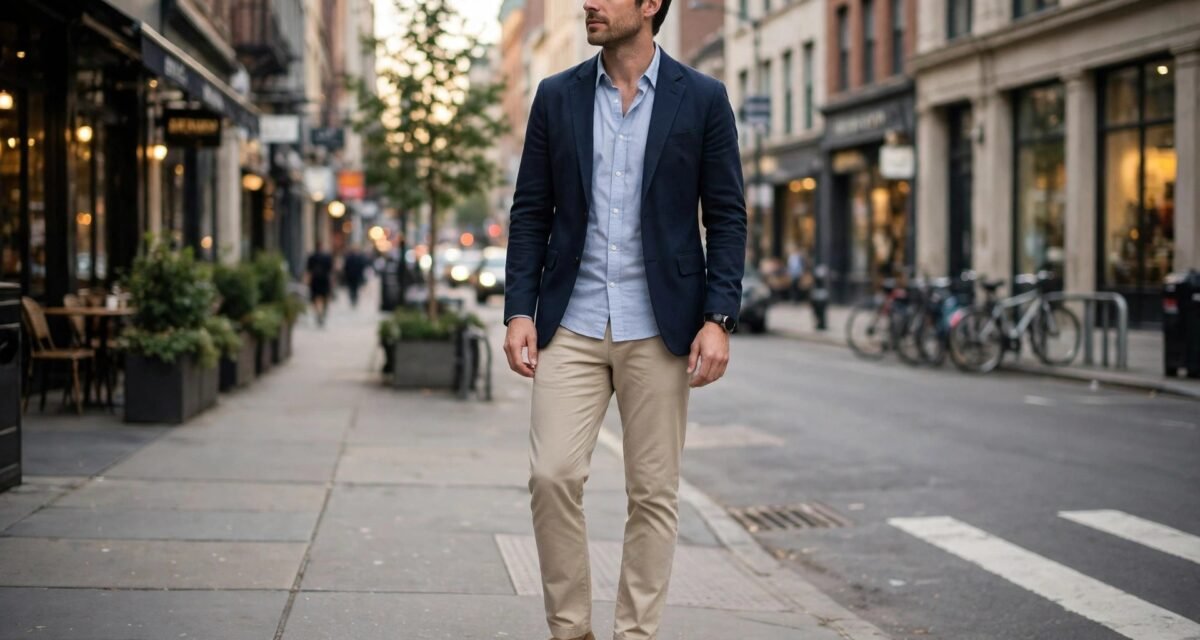
With chinos, almost any slip-on style works. Leather loafers dress chinos up for a smart occasion, suede loafers keep them smart-casual, and canvas slip-ons make them relaxed for a weekend. The key is the trouser length: chinos worn with slip-on shoes look best with a slight break or no break at all, so that the shoe is visible and the ankle is clean. A tapered chino leg suits a loafer particularly well, because it creates a neat line from the knee to the shoe.
With jeans, suede loafers and canvas slip-ons are the natural partners. A dark, slim jean with a suede loafer and a smart shirt is a classic smart-casual outfit that works for dinners, social occasions, and smart workplaces. Lighter jeans with canvas slip-ons suit weekends and holidays. With a suit, only a polished leather loafer is appropriate, and it should be in a colour that matches or complements the suit: black with darker suits, dark brown with navy and grey suits, and a plain, unadorned loafer for the most formal settings.
With shorts, canvas slip-ons, espadrilles, and driving shoes are the right choices, while a leather loafer can work with tailored shorts for a smart summer occasion. The guiding principle is consistency of formality: match the formality of the shoe to the formality of the rest of the outfit, and the result will look intentional. A polished loafer with beach shorts looks mismatched, just as a canvas plimsoll with a suit looks underdressed, however comfortable either combination might feel.

Caring for Slip-On Shoes
Leather slip-ons reward regular care. Brush off dirt after wear, polish with a suitable leather polish, and condition the leather periodically to keep it supple and prevent cracking. Use shoe trees when the shoes are not being worn, because they help leather loafers keep their shape and absorb moisture, which extends their life considerably. Rotate your shoes where possible, giving each pair a day’s rest between wears, so that moisture can dry out and the leather can recover its shape.
Suede slip-ons need a different routine. Brush suede regularly with a suede brush to lift the nap and remove surface dirt, use a suede protector spray before first wear and periodically afterwards, and treat stains promptly with a suede eraser or a specialist cleaner. Avoid wearing suede in heavy rain, and if suede shoes do get wet, let them dry naturally away from direct heat, stuffed with paper to keep their shape, rather than forcing them dry with a radiator or a hairdryer.
Canvas and knit slip-ons are the easiest to care for, and many can be cleaned with a damp cloth or, following the manufacturer’s instructions, machine washed. Remove the insoles before washing where possible, and let the shoes dry naturally rather than tumble drying them, which can warp the soles and shrink the fabric. Whatever the material, check the soles regularly: worn soles reduce grip and comfort, and a good cobbler can resole leather shoes, extending the life of a favourite pair well beyond what the original sole would allow.
Common Mistakes to Avoid
The most common mistake with slip-on shoes is buying the wrong size and hoping it will improve. A slip-on shoe that slips badly at the heel or pinches across the foot will not become comfortable through perseverance alone, and it can cause blisters and foot pain. Another mistake is choosing a slip-on style for the wrong occasion: a canvas shoe for a smart office, a suede shoe for a wet walk, or a driving shoe for a long hike. Match the shoe to the occasion, the weather, and the ground you will actually walk on.
Another frequent problem is neglecting care, especially for leather and suede. Slip-on shoes are easy to put on and forget, which means they are also easy to neglect, and neglected leather cracks, neglected suede stains, and neglected soles wear unevenly. A few minutes of care after wear makes a real difference to how long a pair lasts and how good it looks. Finally, do not wear slip-on shoes without considering socks: bare feet in leather shoes can cause odour and discomfort, while visible sports socks with loafers can spoil an otherwise smart outfit. No-show socks solve both problems neatly.
Frequently Asked Questions
Are slip-on shoes smart enough for work? Leather loafers are smart enough for most offices, including many with a smart dress code, especially in black or dark brown leather with a clean, plain design. Suede loafers suit smart-casual workplaces, while canvas and knit slip-ons are best kept for casual days, weekends, and holidays.
Should slip-on shoes be tight or loose? They should be snug without pinching. The heel should stay in place with only minimal movement, the toes should have room to move, and the shoe should feel secure without squeezing the foot. A small amount of initial stiffness is normal in leather, but persistent heel slip or toe cramping means the fit is wrong.
Can you wear slip-on shoes without socks? You can, especially in summer with canvas or driving shoes, but no-show socks are generally a better choice. They protect both the shoe and the foot, prevent odour, and preserve the bare-ankle look without the drawbacks of going completely sockless.
Are slip-on shoes good for walking? It depends on the style. A well-fitting leather loafer with a supportive sole is fine for everyday walking and city days, while a soft driving shoe or a canvas plimsoll is better for short, relaxed walks than for long distances or rough ground. For serious walking, a dedicated walking shoe remains the better choice.
How do I stop my slip-on shoes slipping at the heel? Start by checking the size and width, because persistent slip usually means the wrong fit. Heel grips, insoles, and no-show socks can help with minor slip in a new leather shoe that is still moulding to your foot, but they will not fix a shoe that is fundamentally too large.
Conclusion
The best slip ins shoes men choose are the ones that match their life: a polished leather loafer for work and smart occasions, a suede loafer for smart-casual days, a canvas or knit slip-on for weekends, holidays, and travel. Get the fit right by trying shoes on later in the day, with the socks you intend to wear, and walking on a hard floor before you buy. Match the material to the weather and the occasion, care for leather and suede properly, and match the formality of the shoe to the rest of your outfit. Done that way, a slip-on shoe is not a compromise at all; it is simply the easiest, most comfortable, and often the smartest shoe in your wardrobe.

magazinesupdate
Sharing practical guides, news and insights on Magazines Update.